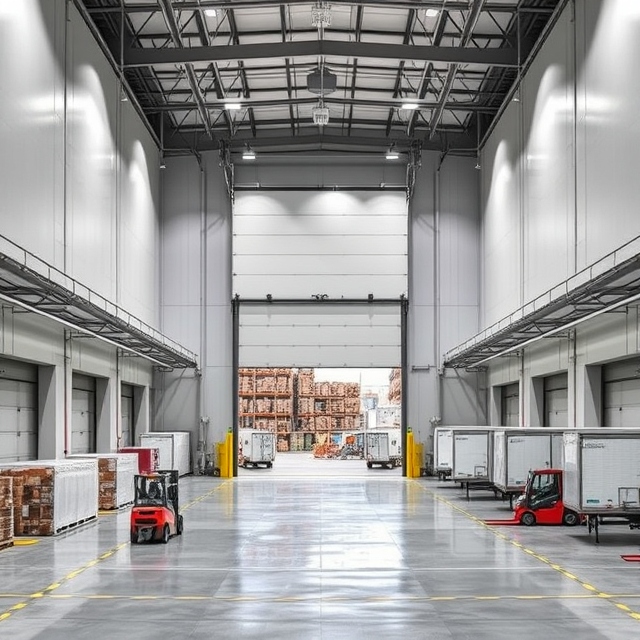
Cold chain logistics doors are an important part of refrigerated distribution centers because every transfer between storage, handling, and dispatch areas can affect the temperature-controlled environment. A well-planned doorway needs to support both thermal separation and efficient movement of products, people, and material-handling equipment.
In a busy distribution center, doors may connect freezer rooms, chilled storage areas, staging zones, packing spaces, loading docks, and ambient warehouse sections. Each connection can have different temperature and traffic requirements, so the door system should be selected according to how that specific area operates.
Why Doors Matter in Cold-Chain Logistics
Cold-chain logistics depends on maintaining appropriate product conditions throughout storage and movement. The refrigerated warehouse is only one part of that process.
A doorway creates a transition between two environments. When it opens, air can move between them. The effect becomes more important when doors are opened frequently, remain open for extended periods, or separate areas with significantly different temperatures.
For this reason, refrigerated distribution centers should consider doors as part of the wider temperature-control system rather than as simple building access points.
Different Zones Need Different Door Strategies
A modern refrigerated distribution center may contain several operational zones, including:
- Chilled storage rooms
- Frozen storage areas
- Temperature-controlled staging areas
- Picking and packing zones
- Refrigerated loading areas
- Ambient warehouse sections
- Production or processing rooms
These areas do not necessarily operate at the same temperature or experience the same traffic.
A door between a freezer and a low-traffic service corridor may have different requirements from a doorway used continuously by forklifts moving pallets between cold storage and a dispatch area.
The first step is therefore to understand what happens on both sides of the doorway.
Traffic Flow Should Influence Door Selection
Material movement is one of the most important considerations in refrigerated logistics.
Forklifts, pallet trucks, carts, conveyors, and workers may all use cold-storage access points. If the door is difficult to operate or poorly matched to the traffic pattern, it can create delays and encourage operators to leave the opening exposed longer than necessary.
Facilities should examine:
- Number and type of daily movements
- Forklift dimensions
- Pallet size
- Opening width and height
- Available clearance
- Door cycle frequency
- Operator visibility
- Safety requirements
- Whether automated operation is appropriate
High-frequency routes may justify an automated or high-speed configuration, while lower-traffic areas may work with other insulated door arrangements.
Thermal Separation and Sealing
Insulation is only one part of a refrigerated doorway. The frame, perimeter seals, panel construction, and installation also contribute to the effectiveness of the barrier.
A properly closed door should limit unnecessary air movement between adjacent zones. Damaged seals, misalignment, or gaps around the frame can reduce the effectiveness of the complete assembly.
Maintenance teams should watch for practical warning signs such as:
- Damaged or compressed gaskets
- Difficulty closing the door
- Visible gaps around the perimeter
- Frost or condensation near the opening
- Damaged tracks or rollers
- Unusual movement or operating noise
These conditions can indicate that inspection or adjustment is needed.
Loading Docks Need Special Attention
The connection between a refrigerated warehouse and a loading area can be particularly important because products may move between cold storage and refrigerated vehicles.
The doorway needs to accommodate the actual loading process while limiting unnecessary exposure to ambient conditions. Dock shelters, seals, staging areas, and appropriate door configurations can all form part of this overall design.
The goal is to create a smooth transfer process in which products do not spend unnecessary time exposed during loading or unloading.
How Door Speed Fits Into Cold-Chain Operations
Door speed should be considered together with traffic volume and safety rather than treated as an isolated specification.
A high-traffic doorway may benefit from faster opening and closing because operators need efficient access. However, the door still needs to provide safe operation and adequate clearance for the equipment using the opening.
For example, a forklift route between a frozen warehouse and a staging area may require a different operating configuration from a personnel entrance used only occasionally.
This is where site-specific planning becomes important. The correct solution depends on the interaction between traffic, temperature, opening dimensions, safety, and workflow.
Choosing Refrigerated Warehouse Doors for Distribution Facilities
When reviewing refrigerated warehouse doors, facility managers should consider the complete operating environment rather than selecting a door solely by size or opening speed.
A practical assessment can include four stages.
1. Identify the Temperature Zones
Document the temperature conditions on each side of the opening. Determine whether the doorway connects a freezer, chilled room, controlled staging area, or ambient space.
2. Map the Traffic
Record how people, forklifts, pallet trucks, and other equipment move through the doorway. Identify the busiest routes and periods of frequent access.
3. Evaluate the Physical Opening
Check the required width, height, available side space, overhead clearance, floor conditions, and surrounding equipment.
4. Match the Door to the Workflow
Compare sliding, high-speed, automatic, or other suitable configurations according to the actual requirements. The selected door should support efficient movement without compromising temperature separation or safe operation.
Maintenance Is Part of Cold-Chain Performance
Even a well-specified door requires ongoing inspection. Moving components can wear, seals can deteriorate, and alignment can change through repeated operation.
A preventive maintenance program should consider the door’s tracks, rollers, seals, sensors, motors, hardware, and emergency-release components where applicable.
Cleaning should also be incorporated into the facility’s normal operating procedures, particularly where food, pharmaceutical, or other sensitive products are handled.
Common Questions About Cold-Chain Doorways
How do warehouse doors affect cold-chain logistics?
Doors influence the separation between temperature-controlled and surrounding areas. Frequent opening, poor sealing, or unsuitable operation can make temperature management more difficult.
What type of door is suitable for a busy refrigerated warehouse?
The appropriate type depends on traffic frequency, temperature, opening size, safety requirements, and available space. High-speed or automated systems may suit some high-traffic routes, while sliding or other insulated configurations may suit different applications.
Are insulated doors enough for cold-chain operations?
Insulation is important, but the complete doorway also matters. Seals, frames, operating speed, installation, maintenance, and traffic behavior all contribute to how effectively the opening separates different environments.
Why should loading docks be considered separately?
Loading docks connect the warehouse with vehicles and outside conditions. Their design needs to account for vehicle positioning, product transfer, door operation, and the time products spend moving between controlled environments.
Effective cold-chain logistics depends on more than refrigeration equipment and storage temperature. Doorways connect the different stages of a refrigerated distribution operation, so their insulation, sealing, traffic capacity, operating method, and maintenance should be considered as part of the overall facility design. When each doorway is matched to the temperature zone and workflow it serves, refrigerated distribution can operate with a more practical balance between product protection and efficient material movement.