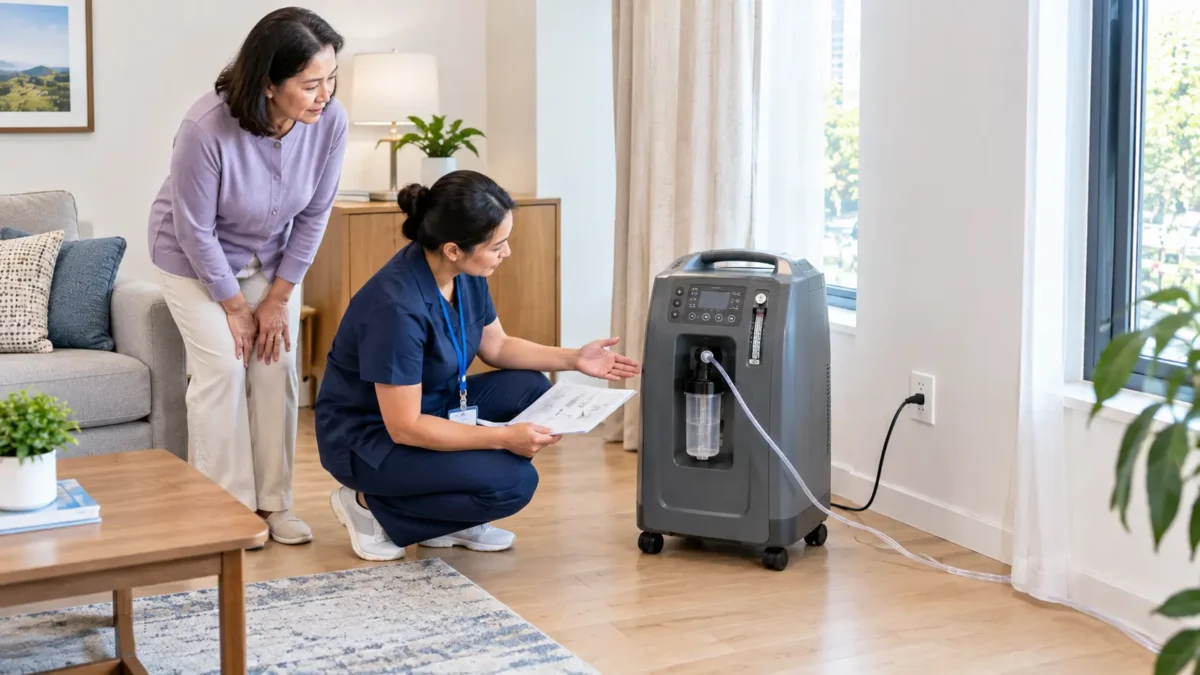
Home oxygen concentrator safety begins with choosing a suitable location, maintaining adequate ventilation, following electrical precautions, and keeping oxygen equipment away from fire hazards. Preparing the surrounding space before installation helps reduce avoidable risks during prescribed home oxygen therapy.
A stationary oxygen concentrator draws in room air and produces oxygen-enriched gas for delivery through compatible accessories. Because the equipment requires airflow and electrical power, its location can affect both operating conditions and household safety.
The safest setup follows the manufacturer’s instructions and the patient’s healthcare provider’s recommendations.
Home Oxygen Concentrator Safety: Choosing the Right Location
A stationary concentrator should stand upright on a firm, stable surface unless the manufacturer specifies otherwise.
The location should allow the patient to use the equipment comfortably without obstructing walkways or creating unnecessary tubing hazards.
Avoid positioning the machine where someone could knock it over, expose it to liquids, or surround it with household clutter.
Keep the Equipment Accessible
Patients and caregivers should be able to see the control panel and recognize warning indicators.
In addition, the power connection should remain accessible when the manufacturer requires it.
Placing the concentrator behind heavy furniture or inside an enclosed cabinet may make routine observation difficult.
A suitable location should balance accessibility, comfort, and safe operation.
Home Oxygen Concentrator Safety and Ventilation
Adequate ventilation is essential because oxygen concentrators depend on surrounding air for normal operation.
The machine draws room air through its intake system and releases exhaust air during the oxygen-separation process.
Blocked ventilation openings may interfere with equipment performance or contribute to overheating.
How Much Space Should Surround a Concentrator?
The required clearance depends on the manufacturer’s specifications.
Some models specify minimum distances from walls, curtains, furniture, and other objects.
Therefore, users should consult the exact equipment manual rather than applying a universal clearance measurement.
In general, keep air intake and exhaust openings unobstructed.
Avoid covering the machine with blankets, towels, or decorative fabric.
Can a Concentrator Operate in a Small Room?
A concentrator may operate safely in a smaller room if the location meets the manufacturer’s ventilation and operating requirements.
However, enclosed cupboards, poorly ventilated storage spaces, and confined compartments may be unsuitable.
Room size alone does not establish whether an installation is safe.
Users must also consider the equipment’s airflow requirements, surrounding temperature, and manufacturer’s instructions.
Oxygen Fire Safety Precautions at Home
Oxygen itself is not flammable, but it supports combustion.
Consequently, materials can ignite more readily and burn more intensely in oxygen-enriched conditions.
This makes fire prevention particularly important wherever patients use oxygen therapy.
Keep Oxygen Away From Flames and Smoking
Nobody should smoke near oxygen equipment or oxygen delivery accessories.
Likewise, keep the equipment and patient oxygen interface away from candles, open flames, and other ignition sources.
Follow the manufacturer’s specified separation distances.
Household members and visitors should understand these precautions before oxygen therapy begins.
Avoid Oils and Flammable Products
Petroleum-based products, oils, grease, and certain flammable sprays can create hazards around oxygen equipment.
Do not apply unsuitable substances to oxygen connectors or equipment components.
Patients should ask their healthcare provider about compatible skin-care products if oxygen therapy causes nasal or facial dryness.
For further information, the U.S. Food and Drug Administration’s guidance on home oxygen therapy explains important precautions for using oxygen equipment at home.
Electrical Safety for Stationary Oxygen Concentrators
Stationary concentrators generally require a suitable household electrical supply.
Before installation, confirm that the equipment’s voltage and frequency specifications match the available outlet.
For example, the Drive DeVilbiss 525KS is a mains-powered stationary concentrator designed for an appropriate 220–230V, 50Hz supply.
When reviewing a stationary oxygen concentrator example, buyers should check the manufacturer’s electrical requirements alongside the intended installation location.
Use a Suitable Electrical Outlet
Follow the manufacturer’s instructions regarding grounded outlets, power connections, and electrical accessories.
Do not assume that extension cords, power strips, or plug adapters are acceptable.
Some manufacturers specifically prohibit these arrangements.
In addition, keep electrical connections away from water and areas where spills are likely.
Inspect Power Cords
A damaged power cord can create an electrical hazard.
Check accessible cords for visible wear, loose connections, or damage.
If you identify a problem, contact the equipment provider rather than attempting an unauthorized repair.
Arrange Oxygen Tubing to Reduce Trip Hazards
Oxygen tubing may extend between the concentrator and the patient’s usual seating or sleeping area.
Poorly positioned tubing can create obstacles for patients, caregivers, and visitors.
Therefore, plan the tubing route before regular use.
Useful precautions include:
- Keep tubing away from frequently used walking paths where practical.
- Avoid sharp bends, crushing, or kinking.
- Prevent tubing from becoming trapped beneath furniture.
- Check that connections remain secure.
- Use only tubing lengths and arrangements that the equipment manufacturer approves.
Do not extend tubing beyond manufacturer-approved limits simply to position the concentrator farther away.
If the current arrangement creates difficulties, ask the equipment provider about compatible alternatives.
Home Oxygen Concentrator Safety in Different Environments
Environmental conditions can affect where a concentrator should operate.
Avoid locations with excessive heat, moisture, or direct contact with water.
Likewise, keep the equipment away from areas where children or pets could interfere with controls, cords, or tubing.
The manufacturer’s operating temperature and humidity specifications should guide placement.
If you move the equipment between rooms, confirm that the new location meets the same safety requirements.
Consider Household Activities
Everyday household activities may introduce additional hazards.
For example, cooking areas, frequently used doorways, and crowded living spaces may increase exposure to heat sources or tubing obstacles.
Therefore, choose a location that supports the patient’s routine without introducing unnecessary risks.
Prepare for Power Interruptions and Equipment Alarms
A safe home setup should include a plan for unexpected equipment interruptions.
Most stationary oxygen concentrators depend on continuous electrical power and do not have built-in batteries for extended operation.
Therefore, patients who require uninterrupted oxygen delivery should discuss backup arrangements with their healthcare team.
Caregivers should also understand the equipment’s warning indicators and know whom to contact if an alarm occurs.
If prescribed oxygen delivery becomes unavailable, follow the clinician-approved backup plan.
Seek emergency medical assistance if the patient experiences severe breathing difficulties or other emergency symptoms.
Home Oxygen Concentrator Safety Checklist Before Regular Use
Before beginning routine operation, review the installation with the equipment provider.
Confirm the following:
- The concentrator stands securely in an appropriate location.
- Air intake and exhaust openings have sufficient clearance.
- Electrical connections meet the manufacturer’s requirements.
- Oxygen tubing follows a safe route without unnecessary restrictions.
- Household members understand smoking and fire precautions.
- Caregivers can recognize relevant equipment warnings.
- The patient has an appropriate backup plan when clinically necessary.
Repeat these checks whenever someone rearranges furniture or moves the concentrator.
These simple precautions help maintain a suitable environment for ongoing oxygen therapy.
Final Thoughts on Home Oxygen Concentrator Safety
Preparing a home for oxygen concentrator use involves more than finding space for a medical device.
Proper ventilation, stable equipment placement, electrical safety, fire prevention, and careful tubing arrangements all contribute to a safer environment.
However, installation requirements vary between concentrator models and individual treatment plans.
Following manufacturer instructions and professional medical guidance helps patients and caregivers create a practical home setup that supports reliable oxygen therapy while reducing avoidable household hazards.


